
درسنامه آموزشی زبان انگلیسی (3) کلاس دوازدهم
درس 2: Look it Up
Interesting Facts:
- The first Persian dictionary was compiled around 1000 years ago.
- The largest dictionary in the world took 134 years to complete (from 1864 to 1998).
- Around 4,000 new words are added to the English dictionary every year.
- The size of the smallest dictionary in the world is about 27×18 mm (Read it as: Twenty-seven by eighteen millimeters) which needs to be read with a magnifying glass.
Get Ready
A. Match pictures with dictionary types.
|
|
|
|
|
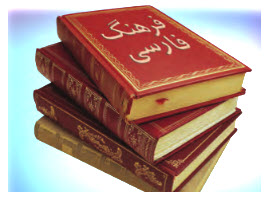
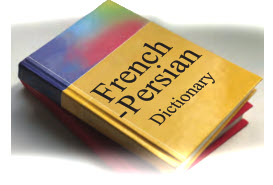
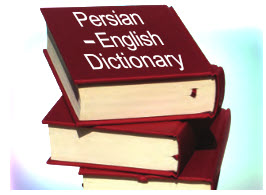
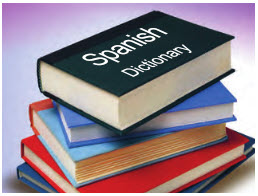
I. A monolingual dictionary
II. A bilingual dictionary
B. Check which type of dictionary you use in the following situations.
| Dictionary Types Situation | An English-Persian dictionary | A Persian-English dictionary | An English dictionary |
|---|---|---|---|
| 1. Translating an English poem | |||
| 2. Finding the meanings of ‘quit’ | |||
| 3. Searching for the word ‘ساختمان’ in English | |||
| 4. Looking up the adjective of ‘destroy’ | |||
| 5. Looking up the Persian meaning of “actions speak louder than words” |
C. Check what types of information you cannot find in an English dictionary.
.... English meaning
.... Persian meaning
.... pronunciation
.... stories and poems
.... word types (verb, noun, adjective, etc.)
.... synonyms and antonyms
Conversation
Majid is going to choose a suitable dictionary for his English class. He is talking to his English teacher during the break.
Majid: Excuse me Mr. Iranmehr, I wonder if you could help me.
Mr. Iranmehr: Sure. How can I help you?
Majid: I’d like some information about a good English dictionary.
Mr. Iranmehr: Oh, well. Have you ever used a dictionary?
Majid: Actually, I haven’t. But I’ve heard that using a good dictionary can really help me learn English better.
Mr. Iranmehr: That’s right. First, I recommend a learner’s dictionary.
Majid: What is a learner’s dictionary?
Mr. Iranmehr: It is designed for foreign students. It also helps them learn English better.
Majid: Is there only one type of it?
Mr. Iranmehr: No, in fact dictionaries have different types, levels, and sizes.
Majid: What type do you suggest?
Mr. Iranmehr: I suppose a monolingual dictionary is more suitable for you, because you can find word information in English.
Majid: And what about levels?
Mr. Iranmehr: Well, there are usually three levels: elementary, intermediate and advanced. For you as a high school student, an elementary one is OK.
Majid: Do I need a small size one?
Mr. Iranmehr: Yes, a pocket dictionary. You can carry it wherever you go.
Majid: Oh, it’s very good. And hmm…, is it expensive?
Mr. Iranmehr: No, such dictionaries are not expensive. By the way, you can use a free online dictionary, too. And also there are some free dictionaries for PCs and apps for smart phones.
Majid: Thanks, that’s a good idea, but I’d like to use a pocket dictionary!
....
Questions
Answer the following questions orally.
1. What type of dictionary does Mr. Iranmehr recommend?
2. What factors do you consider when you want to choose a dictionary?
3. What type of dictionary do you often use?
....
New Words & Expressions
A. Look, Read and Practice.
|
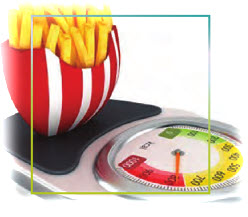
Try to avoid foods that contain a lot of fat. |
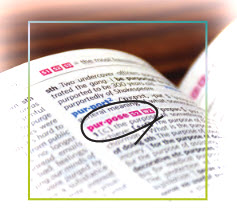
I circled the dictionary entry for the word ‘purpose’. |
|
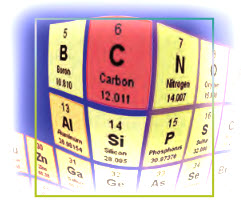
C is the symbol for carbon. |
I.R. stands for Islamic Republic. |
|
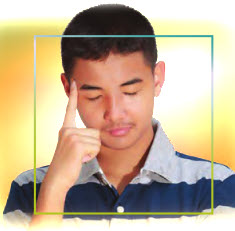
Mehran couldn’t figure out what the teacher was talking about. |
|

B. Read and Practice.
combination: an arrangement in a particular order
From the letters X and Y, we can get two combinations: XY and YX.
introduction: the part at the beginning of a book that gives a general idea of what it is about
This book has only a two-page introduction.
effectively: in a way that is successful and achieves what you want
If you know how to study more effectively, you’ll be able to learn more.
arrange: to put things in a neat, attractive, or useful order
We’ll need to arrange the chairs around the table.
jump into: to suddenly decide to do something
I did not read the introduction and jumped into the next part.
.....
C. Go to Part ‘Vocabulary’ of your Workbook and do A and C.
Reading
How to Use a Dictionary
A good dictionary gives the user information about words such as spellings, pronunciations and definitions. It also gives examples of how to use the words in sentences correctly. Therefore, it is essential to know how to use a dictionary. In this lesson, we provide you with some helpful tips on how to use a dictionary effectively.
1. Choose the Right Dictionary. There are many different types of dictionaries such as learner’s dictionaries, general dictionaries, picture dictionaries, etc. Therefore, first identify your needs. Without choosing the right one you cannot meet your language needs.
2. Read the Introduction. The best way to learn how to use your dictionary effectively is to read its introduction. This section explains issues like how entries are arranged, what information is offered in entries and what abbreviations and pronunciation symbols are used throughout the entries.
3. Learn the Abbreviations. Different types of abbreviations are often used in the definitions for a word. This can be confusing if you do not know what the abbreviations stand for.
4. Learn the Guide to Pronunciation. If you immediately jump into using the dictionary without understanding the pronunciation guide, it can be difficult to figure it out.
5. Read the Guide Words. These are the two words at the top of each page that show the first and last entries on the page. These words will help you find the word you are looking for in the right letter section.
6. Read the Definitions. Once you find an entry, you can find the exact meaning of the word, its pronunciation, part of speech, synonyms, antonyms, and probably its origin.
7. Look for Collocations. Learning the meaning of a single word is not usually enough. Through sentence examples, try to learn ‘words in combination’ to expand your vocabulary.
.............
Reading Comprehension
A. Read the following paragraph and highlight the most important information.
Sharks are not all the same. In fact, there are nearly 400 different kinds. Most sharks never attack people. Only a special group of sharks can be dangerous. They kill an average of forty people every year. Let’s compare sharks with snakes. Snakes kill about 60,000 people every year. And let’s not forget that people kill 25,000,000 sharks every year.
B. Now go back to the ‘Reading’. It claims that you can be familiar with useful information to use a dictionary more effectively. Highlight parts of the passage that support this claim.
C. Read the ‘Reading’. Generate questions with the following question starters and then answer them.
What
1)
2)
How
1)
2)
Where
1)
2)
Vocabulary Development
A. Look at the following sentences. Write down at least one other word you know that is related to the bold word.
- My job has become increasingly difficult.
- He wasn’t very communicative and kept to himself.
- The police believe the fire was started accidentally.
- The pollution is endangering the crops.
- We searched unsuccessfully for a map of Kerman.
B. Attack these words to figure out their meanings. Try to write down other words related to them. For example:
disconnection: disconnect / connection / connect
- unsystematically:
- incomprehensible:
- unexpectedly:
- international:
- unchangeable:
Grammar
A. Read the following texts.
B. Read the following example sentences.
| The man plays golf. He lives at No. 10. |
The man who plays golf lives at No. 10. | |
| The woman is coming to dinner. You met her yesterday. |
The woman who(m) you met yesterday is coming to dinner. | |
| The cat lives near us. It was drinking milk. |
The cat which lives near us was drinking milk. | |
| I found the keys. I lost the keys yesterday. |
I found the keys which I lost yesterday. | |
| The man who plays golf lives at No. 10. | The man that plays golf lives at No. 10. |
| The woman who(m) you met yesterday is coming to dinner. | The woman that you met yesterday is coming to dinner. |
| The cat which lives near us was drinking milk. | The cat that lives near us was drinking milk. |
| I found the keys which I lost yesterday. | I found the keys that I lost yesterday. |
C. Tell your teacher how ‘relative clauses’ are made.
D. Read the following paragraph and fill in the blanks with ‘who’ or ‘which’.
Mr. Sanders is a doctor .......... lives in a city. He works in a village ........ is near the city. Each morning he goes to the village and comes back home in the evening. Mr. Sanders usually catches the morning train .......... enters the station at 7:30. The train .......... he catches is not very crowded. There are some teachers and workers .......... also work in the village. Mr. Sanders knows some of them. They sometimes talk about interesting things, like weather and sports. He often reads on the train. He reads books or newspapers .......... he borrows from the stand in the station. Although his travel to the village takes around 45 minutes, he enjoys every minute of it. He is the type of guy .......... likes to spend his time wisely.
E. Complete the following sentences. Then compare them with your friend.
Example: Rudaki who lived in the 4th century is a famous Persian poet.
1. Ostrich is a bird ............. .
2. Our English teacher ............. .
3. The notebook ............. .
F. Go to Part ‘Grammar’ of your Workbook and do A.
See Also (Conditional sentences (Type II))
A. Read the following example sentences.
If the old man had his glasses, he could read the paper.
They would be healthier if they lived in a village.
If it got warmer, they would travel to the north.
John could fix the car if he were home.
If my mother were here, I would ask her for help.
I would buy a house if I were you.
B. Go to Part ‘Grammar’ of your Workbook and do B and C.
Listening & Speaking
A. We use ‘conditional type II’ to talk about imaginary situations.
- Oh look! It is raining so heavily.
- What would you do if it weren’t raining?
- Hmm… if it were sunny, I would go to the park. I am really bored.
- We can play one of our thinking games, instead.
- We could play ‘Smart Kid’ if Sina were home.
- This one is also fun. Let’s try it.
....
B. Listen to the following conversations and answer the questions.
Conversation 1
Where does Mina live?
Why hasn’t Zoreh invited Mina yet?
Conversation 2
What did Bijan want to buy?
Why didn’t Bijan tell Mehran about the problem?
Writing
A: Look at the examples below. Choose the one which has the right shape for a paragraph.
Oceans and Lakes
Oceans and lakes have much in common, but they are also quite different.
Both are bodies of water, but oceans are very large bodies of salt water, while lakes are much smaller bodies of fresh water.
Lakes are usually surrounded by land, while oceans are what surround continents.
Both have plants and animals living in them.
The ocean is home to the largest animals on the planet, whereas lakes support much smaller forms of life.
Oceans and Lakes
Oceans and lakes have much in common, but they are also quite different. Both are bodies of water, but oceans are very large bodies of salt water, while lakes are much smaller bodies of fresh water. Lakes are usually surrounded by land, while oceans are what surround continents. Both have plants and animals living in them. The ocean is home to the largest animals on the planet, whereas lakes support much smaller forms of life.
Oceans and Lakes
Oceans and lakes have much in common, but they are also quite different. Both are bodies of water, but oceans are very large bodies of salt water, while lakes are much smaller bodies of fresh water.
Lakes are usually surrounded by land, while oceans are what surround continents. Both have plants and animals living in them. The ocean is home to the largest animals on the planet, whereas lakes support much smaller forms of life.
B. Look at the topic sentences from paragraphs you have seen in Vision 2. Find the topic and the controlling idea.
1) Language is a system of communication.
2) About fifty percent of the world’s languages have fewer than 5000 speakers.
3) Bad habits and addiction can be harmful to health.
4) Art is what people create with imagination and skill.
5) Handicrafts are good examples of the art and culture of a country.
Read the following paragraphs. First find the topic sentence, then circle the topic, and underline the controlling idea.
1. Ants are found everywhere in the world. They make their home in buildings, gardens, etc. They live in anthills. Ants are very hardworking insects. Throughout the summers they collect food for the winter season. Whenever they find a sweet on the floor, they stick to the sweet and carry it to their home. Thus, in this way, they clean the floor. Ants are generally red and black in colour. They have two eyes and six legs. They are social insects.
2. The stars are tiny points of light in the space. On a clear night we can see around 2,000 to 3,000 stars without using a telescope. Stars look tiny in the sky because they are far away from the Earth. In ancient times the sky watchers found patterns of stars in the sky.
3. An online dictionary is one that is available on the Internet or World Wide Web and is accessed through a Web browser using a computer or a mobile device, primarily by typing a term into a search box on the site. Online dictionaries offer immediate, direct access through large databases to a word’s spelling and meanings, plus a host of information, including its spellings, pronunciation, and origin, etc.
4. A hearing device is available for some people suffering from hearing loss. This device uses a magnet. Like other aids, it converts sounds into vibrations and transmits them directly to the magnet, and then to the inner ear, producing a clearer sound. The device helps those with a hearing loss caused by infection or other problems in the middle ear
C. Write a topic sentence for the following items.
1) sport
2) writing
3) forest
4) smoking
5) firefighters
6) Avicenna
7) clean energy
8) Persian Gulf
What You Learned
A. Listen to the first part of a report.
1. Answer the following questions.
a. What would you do if you had a time machine now?
b. Would you live in a jungle if you were allowed to?
2. Listen again and take note of three questions you hear.
B. Now read the rest.
Have you ever thought of superhuman? What abilities would you like to have if you had superhuman powers? Some may say, “I would like to fly if I had superhuman powers.” Others may say, “I would like to be very strong to help people.” Some may say, “I would like to be invisible or read people’s minds.” What about you? Would you like to be able to do these? Think of being an astronaut; where would you like to go?
3. Underline ‘if clauses’.
C. Work in pairs. Ask and answer.
- Would you like to fly?
- What would you do if you found some money?
- Where would you like to travel if you were an astronaut?